Popular Posts

Sunday, February 27, 2011

The road to mental Health


The road to mental health is often bumpy and full of potholes, but with work and dedication attitudes and a determination to get at the cause of illness, will, in the long run show results. As with tangible things, things that can be seen and felt, intangibles like thoughts and ideas, can be made more wholesome with right attitudes and right living.


That is easy to say, but it will take a lifetime to complete. And all own will have to work with is what was alloted to them at birth. That is why early childhood experiences and gentle guiding helps get those first steps on a firm foundation. A child learns by seeing and mimicking what they see their parents do, so parents, in order to get those little one on a firmer foundation, learn how to be good parents.

Love your children and see that they learn there is a God that loves them and then when they are old enough, watch how they begin to start on their journeys. They will be different from yours, but they are necessary. You can help by being understanding and by letting them know how much you love them. Whatever you do, instill into their little minds that life's road is bumpy, but it is all for a purpose.

Thursday, February 17, 2011

Mental health as a first priority


It's always better to look on the positive side of any issue, and what better way to think of the mind. Is it sick or is it well. Most often is is a combination of the two. Hopefully mental health will be above the half way mark at sixty or seventy rather than the other way around.

Although mental illness is not to be ignored and called something else, it is best to use the healthy part of one's thinking to directly influence the negative, or the mentally ill part. While it is true, one can be negative and out of sorts, depressed and not necessarily a pleasant person to be around, and still not be classified as mentally ill, but then neither can they be said to be mentally healthy. Therefore on any given day, one or the other usually dominates.

The purpose of this switch around of focus from mental illness to mental health on this blog is a choice I feel I must make. It is wider in scope and will allow both situations to be aired, talked about, and will generally fit in with my own mind frame. And it will get closer to what I really want to do with this blog. And what is that? To get people to looking at their good mental coping skills first and then to use that positive approach to deal with their lesser, often denied and hidden areas of brain functioning that they prefer not to admit having.

Where to start? Why not with the National Institute of Mental Health.

Monday, February 7, 2011

Creativity and mental illness: How does it relate?


Creativity, creating something new, is nothing more than a way certain people react to their surroundings. This is their way of making sense out of their disturbing influences, and as such is healthy. It can be defined as a method of coping and trying to understand the misunderstood.

Poetry, art, music, sculpting, acting, and most other endeavors can be elevated, and often are, by applying the principles and practices of art to them. Another way of saying that is to say that nearly every undertaking, cooking, sewing, gardening, can be elevated to the status of art by one specially gifted in the venture, and at the same time, in another person remain simply a necessity.

I've long thought that each person has an art sense about them, all they need to do is to find it. It is that something that elevates a person above and beyond the necessities of the day, waking up, eating breakfast, going to work. Creativity needs that too, but it needs that certain something that can only be supplied by those who are tuned to its specifics.

All creation begins with God. He created us in His image, and to the extent that we recognize the source of our creative energy,is usually what separates the simply doing to pass time, from the original work of art. To deny a superior being in our lives is to compare a doll, a copy, with a real baby!

Sunday, January 30, 2011

Knowing right from wrong


Knowing right from wrong makes all the difference when dealing with mental illness and the court system. Of course, those filling up jails and prisons are mentally ill, to a degree, and many of them are smart enough to crawl under the umbrella of mental illness to escape their sentence. Likewise a great many, while in prison have seen the error of their ways and have used the sentence as a way to heal themselves.

This topic of knowing right from wrong surfaced today while reading mental illness headlines. It seems that many are shouting that dollars need be spent to to treat mental illness in jails and in prisons. This is good and is something that should be considered, but there is that caution that says, those likely to repeat their offenses should not be so easily turned loose.

In a way it seems this is just another item that can be turned into a reason to generate hostility and a cause that many will want to take up arms against. That method of dealing with mental illness is a sick idea. The courts must keep to their distinction between insanity -- knowing right from wrong -- and mental illness in general. An ill mind is not a safe mind, that is true, but not all ill minds are criminal minds.

A person using a free will to plot a crime of murder, is not a well mind, but most often they know it is something they should not do. Neither should they be allowed to spend their sentence in a hospital with others who may not know right from wrong.

This is one small attempt to set the thinking straight about any attempts to use the mental illness labeling to avoid incarceration. When a crime has been committed, justice must be served. A more hopeful setting is one where the prisoner has the time, and the safety, of learning about themselves, why they did what they did, not the time to plot how to undo the system that put them in prison.

Yes, treat the mentally ill, but be sure everyone involved knows the difference between right and wrong. That is a lesson society, as a whole, has been reluctant to learn.

After writing the above article, I also uploaded it to a website where I usually post article. Check it out at Helium.com. I added several sources of information readers can look to for more information. These I looked over briefly, but have not have actually read.

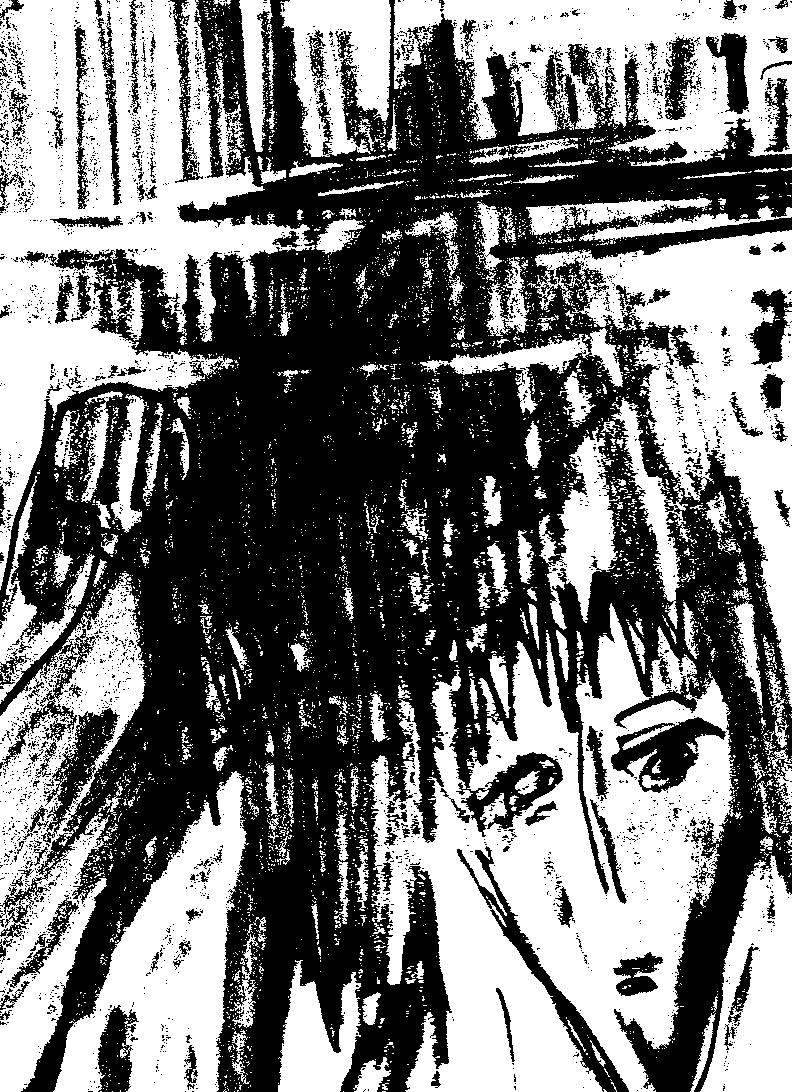
PS: The piece of art is something I found among my papers and I don't remember exactly when it was done. I most often keep my art dabbling, although I am never sure why.

Sunday, January 23, 2011

When is Mental Illness not Mental Illness?


Mental illness is a sick mind the same way physical illness is a sick body. Both of these can recover, and both of these may be permanent, or transitory and they affect the over all health of the mind and body to varying degrees, at different times and at various degrees. And at the same time it near impossible not to have these two conditions overlap, one causing disturbances in the other.

The above need be said if the topic is to be answered, when is mental illness not mental illness? A mind is well when it has the capacity to understand the possibilities of its own sickness. It must guard against mental illness constantly. A mind can become become suddenly ill, was born that way, or it can gradually develop into a full grown illness, much like an undetected cancer can do. As an example, when a mind finds itself blaming others constantly for one's own wrong doing and not even admitting or even realizing that at least a part of the fault lies with them.

Admittedly, these may only be tainted lifestyles and many will argue that blaming others is a coping mechanism and is far removed from mental illness. It relieves the stress from one's own guilt. That may be true, but when getting down to the nitty gritty of mental illness, this refusal to take a look at one's own irresponsible behavior is definitely not leading toward mental health.

Mental illness is not mental illness when we can stop our finger pointing long enough to help others who are in stress, or who need our help. And that happens to such a degree when tragedy strikes that there is indeed hope of recovery for most of us.

Therefore mental illness is not mental illness if we can see what we did wrong to others and say, I am sorry and mean it. A lesson has been learned. But being human, and therefore subject to mental illness, we may again do the same thing, but maybe it will take longer, and will occur under different circumstances, but
we will again see our mistake and attempt to overcome.

When we can put ourselves, or attempt to put ourselves into the other's shoes and truthfully answer, to the best of our ability to know the truth, even though their shoes may not fit our dainty feet, and to answer the question what would we have done, honestly, truthfully, and with the grace God gives us to know the truth,
we will be on the road to recovery if we say, much worse.

The road to mental health is a long one, a long sentence we we must serve and one often where there is more darkness than light. Help comes in many forms, but first it must be recognized as being, not something apart, something that afflicts others only, but part and parcel, of us all. When one hurts or lives in darkness, we all hurt.

Sunday, January 16, 2011

The Tower of Babble: Wrong or right messages


Today, a word of explanation about Headline Hunting. What exactly had I in mind when I created this blog and entitled it Headline Hunting? That is easy to answer. It dealt with my habit of reading only the headlines online each day to quickly learn what what was going on in the world.

Headlines fascinated me. and as a writer, reading them have become somewhat of a hobby. Although I find many that could be made into something other than what was spelled out in black and white, I choose not to. To do so would make someone a butt of a joke, and that has never been my intent.

Therefore, I elevated my purpose of headlines to those whose message I wanted to share with others. That is how mental health, as an ongoing theme, eventually took over Headline hunting on a regular basis. Say something that matters, I told myself. What do you know that others need to know, I further told myself.

Answers don't come easy. I had to admit I know mental illness. I know mental illness from many different angles. I know it as a sufferer of an inherited Bipolar condition; I know it as a nurse working with patients who often manifested mentally ill symptoms; I know it as a member of a family with mental illness when growing up.

And now confession time. The above was not something I cared to talk about freely, however. I much preferred other subjects and still do, but after a lifetime, almost eighty years of living among, dealing with, running away from, I have learned the value of the truth. It is truly the only way to freedom.

Freedom? What has that to do with mental illness? Everything. One is locked into one's own body and must cope to the best of one's ability. When one is programmed from birth to old age with mental aberrations that keeps one from progressing normally, physically or mentally, then one is locked out of a normal life.

The only way out is the truth. It is the truth that belongs to each one individually and cannot be programmed from without. Those on the outside trying to help can do only so much and they know that. They work from the premise of teaching the mentally ill person, if they are teachable and can think coherently, at least part of the time, how to help themselves.

Fortunately for me, thinking and writing and learning has been something I have always liked to do. In other words, I don't know much, but I am willing to learn, if that learning is compatible with what I know of myself, that is.

Therefore, the title alludes to the fact that not only do we often hear the wrong messages from those around us, we have not learned how to deal with them on an individual basis. Or maybe we take the easy way out and go with the crowd, take a pill and stop the psychic pain, deny there are problems while perpetuating problems for others in the meantime. These are temporary fixes that guarantee more problems.

Today's title, therefore, harks back to the Old Testament tale of God becoming irritated at the people of the world being so desirous of Heaven, that they attempted to build a stair way to it. He made each speak a different language and they no longer understood each other. They had no other choice but to dismantle their stairway and stop taking the matter into their own hands.

The moral of the above illustration is this: God speaks to each person individually since He created them this way. What works for one may almost work for another, but a few nuts and bolts -- no insults intended -- may be slightly different. Nations are made up of almost likenesses, but not quite. They are made up of a bunch of ones, but no two are exactly alike. But they are basically better prepared to understand their own next door neighbor than the friend on the other side of the world one met online, or through an email.

And with that explanation we are brought back to the present and to the predicament the world if finding itself in today. What is right and what is wrong, who is responsible, where is it happening, when will it stop and so on. In other words, how do we deal with mental illness?

Do we deal with it by denying that everyone of us, at some time, however infrequent the occasion, have been guilty of wrong thinking, wrong doing and then covering up the fact. Mental illness exists as societal problem and as long as the perpetuation of greed and schemes to try to cure all of us by raising money to throw at it, exists, eradication will only continue to elude a world in need. Money helps, but if only used the right way. To feed, clothe, educate and protect people.

The right question to ask is this message right or wrong? What message? The lies or the truth we tell ourselves, the lies or the truth we tell others, the lies or the truth we refuse to learn...